

DTV “coupon” converter box put to the test. Does it work?

No “film at 11” drama here; yes, it works and it works surprisingly well for a $60 piece of electronics ($20 after the $40 coupon is applied).

For those that don’t know, this Insignia brand NS-DXA1 DTV converter box is one of a few available devices which are part of the US government’s effort to make it possible for people to view over-the-air DTV broadcasts on older, analog-only televisions when the analog transmitters (about 1,700 of them nationwide) are required to cease operations on February 17th, 2009. The coupon program’s plan is to provide a way for those on fixed incomes, or the inability to replace their existing set with one that has a digital OTA tuner in it, to continue to view their favorite local broadcast stations. Continue reading “DTV “coupon” converter box put to the test. Does it work?”
How the format war has changed my purchasing habits.

To be succinct, I simply don’t (and won’t) buy as much as I did before. For the past few years I didn’t think too hard about buying the week’s more popular DVD release of the latest blockbuster (or near blockbuster). This is why my DVD collection sprang to over 400 titles! I didn’t always buy full retail on “new release Tuesday” if I found bargains of popular movies that had been on DVD for a few months already and retailers were anxious to thin their inventory, but the collection grew and represents quite a sizable chunk of change. Continue reading “How the format war has changed my purchasing habits.”

Is the NAB Show going the way of COMDEX?

For those that don’t know, COMDEX was a computer centric convention that ran in Las Vegas from 1979 to 2003 before lagging attendance from competing conventions and the convergence of consumer electronic devices ultimately made it uninteresting and killed it off.

Back in November of 2007 Avid, currently facing too much competition from Final Cut software and currently trading at its lowest point since early 2003, declared it would not have its usual ginormous booth at the convention, but would still have a presence there conducting meetings with customers in an attempt to regain their “focus”.  Their disappointing financials and not-so-optimistic view of their 2008 expectations undoubtedly had something to do with this decision. Continue reading “Is the NAB Show going the way of COMDEX?”

TV Broadcasters struggle to remain relevant. Probably too little, too late.

Traditional, over-the-air TV broadcasters are pretty screwed. Time and technology are rapidly shooting past and only now are they collectively looking for ways to recapture a lost audience. Only now are they, as a majority and as part of a coordinated effort, actively promoting the DTV transition, by way of shutting off the analog transmitters under the government’s plan, that is scheduled to occur February 17th, 2009.

Ashamedly, even though they have had digital transmitters operational for several years because of the government digital transition mandate, most broadcasters have flat out refused to promote that fact to their viewers outside of the addition of the new call letters on an hourly legal ID. Many broadcasters were hoping for and using the NAB to lobby for yet another delay in the analog shutoff.
In much the same way the Emperor felt superior in his new clothes, broadcasters felt secure in their lobbying arm, the NAB, and their sizable ad revenue which they wore like a protective cloak of invulnerability. If it were not for the SHVIA act, retransmission consent, must-carry and syndicated exclusivity laws that essentially force local market broadcasters onto a regional cable head-end’s television set, it is extremely likely that television broadcasters would now be a much leaner business – as radio has become. As it stands, even these legal protections are unable to completely stem the hemorrhaging of viewers to alternative entertainment outlets. Continue reading “TV Broadcasters struggle to remain relevant. Probably too little, too late.”

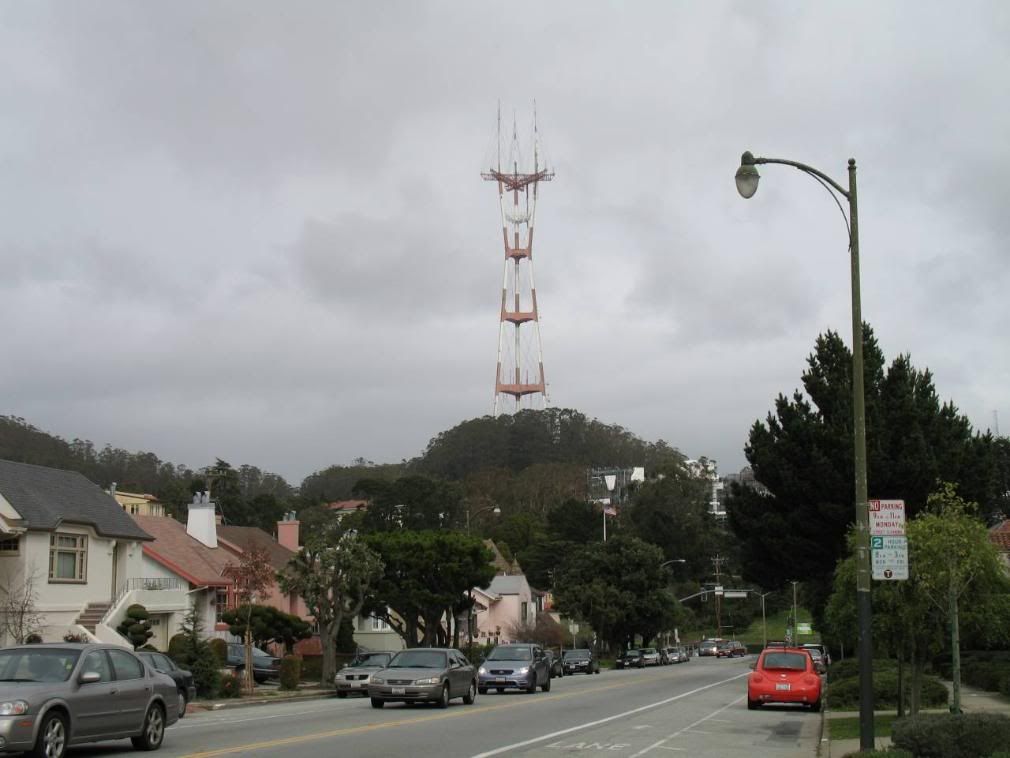
Visiting an SF Landmark. Sutro Tower.

Not many people get inside Sutro Tower, so I consider myself pretty fortunate. My current employer doesn’t have transmit facilities or other interests at Sutro, so I was escorted through the gate and into the facility by a contract engineer, John Buckham, that our SF station has who also maintains a radio station there for another employer of his.

Sutro Tower from a distance.

This was a unique opportunity for a few reasons; since I don’t work there, getting access is impossible unless you know someone and can get something arranged. This is a historically interesting site and it is a unique tower engineering design that has currently weathered 25 years of use. Continue reading “Visiting an SF Landmark. Sutro Tower.”

Video reasons why local news is such a running gag with viewers.

Today I had a brief reminiscing with some fellow engineers about having to deal with the local news crews at former jobs and told a few tales of the regular stampede of useless, re-hashed content, multiple yet pointless liveshots and how they were more funny than informative.

I believe that local news bloopers are one of the big reasons why YouTube has become so popular. So much of what they do is fit only for passive, hilarious examples of short-term amusement.

I have collected a few so you can see for yourself:

Treating analog TV transmitters like sickly inmates on death row. Keep ‘em alive… For now…

All across the nation there are TV stations headed toward the analog shutdown mandated by congress on February 17th, 2009. At which point, only the station’s high power digital transmitter will be authorized to stay on the air along with the Class ‘A’ and low-power TV stations and their low-power translators (for the moment).

So, until that happy day arrives and the engineers can toss a hand grenade in the analog transmitter cabinet and run out the building laughing we need to keep these antiques running. This is one such story… Continue reading “Treating analog TV transmitters like sickly inmates on death row. Keep ‘em alive… For now…”

Why media ownership caps are important. Censorship in action.

I’m a dedicated Capitalist. I work for money. Money pays my mortgages and rent, keeps my fridge full, and house warm in the winter. Obviously, money is important and I want to earn as much of it as I can before I decide I’ve had enough of this “work” thing.

That said, there are times when a company can own so much of one thing that its profiteering interests eliminate enough (or all) competition and they not only set the price I pay but the rules and restriction I and others play by. Depending on the industry this can be a financial pain (like the old Standard Oil monopoly and current Cable monopolies) or it can be downright Orwellian scary (like AT&T). I don’t mind rules and restrictions when I use someone else’s service or property, but when that restriction infringes, even slightly, the Constitution of the United States and the Bill of Rights (especially the First and Second amendments), then my ears perk up, my brow furrows and I get ready for a fight. Continue reading “Why media ownership caps are important. Censorship in action.”

What broadcasters need to know about the core demo.

They don’t watch TV. Mostly. Get it?

OK, I’ll repeat myself. Broadcaster’s (and many cable networks) are not relevant to young people most of the time. This is not news any longer, however it bears repeating, because thick-headed, narrow field-of-view TV execs, GMs and news directors keep fooling themselves into believing they are just one cool news story or graphic sparkle or well-timed-but-intrusive-as-hell snipe away from getting them back. People want to be entertained. Kids like the sensationalistic garbage that MTV and Fox crank out, but more often than not there really isn’t anything compelling for young people to watch on television so the Internet and the nearly infinite sites available to kill time trump the local TV station’s programming and newscasts every time. Continue reading “What broadcasters need to know about the core demo.”

TV Engineering. This ain’t your dad’s Heathkit transmitter, baby!

For those of you that recognize the ‘Heathkit’ reference you get a cookie. Well done.

Unlike the Heathkits of yore I”m using some nice, mostly modern test gear here and servicing a fairly modern transmitter (circa 1998). This is one of those occasions where broadcast engineers get to leave the desk, the whiny news department and office politics to really hone their skills doing manly, gritty, thought-provoking, analytical, rocket scientist-like work that will separate them from the other mindless office drones they will have to return to later.

The back story; one of the stations I oversee here in the San Francisco market had an apparent failure of one of the IOTs (Inductive Output Tube) which, for those not familiar with TV RF work, is used as the final, high-power amplification device to bring a TV signal to a significant strength in order to survive being shot out of an antenna on the tower and over the air to lots of little rabbit ears across the horizon. Continue reading “TV Engineering. This ain’t your dad’s Heathkit transmitter, baby!”