Dr. Horrible Tops In ‘TV Shows’ On iTunes. Only It’s Not A TV Show…

As broadcasters continue to face eroding audiences, lousy programming, declining ratings, a lackluster fall line-up and pending changes in FCC rules regarding ‘localism‘; here comes another punch in the gut.

Joss Whedon of Buffy The Vampire Slayer, Firefly and the Serenity movie fame created a three part mini-musical (!) video netcast called “Dr. Horrible” that only lasted a few days and was born from the catalyst of the recent writer’s strike.

Once upon a time, all the writers in the forest got very mad with the Forest Kings and declared a work-stoppage.

The Doctor Horrible Site

Only one day after the three acts were pulled from the site (as per Joss’ schedule) the mini-netcast series wound up taking the top three slots in the TV Shows Download section on iTunes. Continue reading “Dr. Horrible Tops In ‘TV Shows’ On iTunes. Only It’s Not A TV Show…”

Will The Popcorn Hour NMT Replace My XBMC?

Not yet.  And after the latest debacle with the June 18th firmware, maybe not ever.  My old, original xbox softmodded to run XBMC is still more polished and faster than this little guy, despite the glowing reviews I read which led me to purchase the Popcorn Hour NMT in the first place.

As everyone knows, there is a disconnect between the PC world and the television world – especially when it comes to getting digital video and audio content into the room where the couch and the big TV are.  Many products such as the AppleTV, Xbox 360 and my own shiny PS3 as well as various media extenders try and bridge that chasm promising to play all (or most) of your media library and bring it to your living room HDTV.  Unfortunately, the two big players that are capable of making effective products, Apple and Microsoft, are hobbled by legal roadblocks and business partnerships, both internal and external, that would sour if the box they made performed too well (read: properly) and truly freed your media.

I had high hopes when I read the impressive feature list and got on the waiting list for this little box. The Popcorn Hour A-100 NMT (Networked Media Tank) is quite a capable media player especially considering its diminutive size. The fact that it doesn’t have integrated WiFi doesn’t bother me since I have Cat-5e runs from my living room and my core home network.  When I took delivery of it I did a quick un-boxing to see what I got for my $200 and took the screws off to peek inside…

Inside the Popcorn Hour. The rear connections.

Not bad. I needed to supply a hard drive for many of the included features such as the BitTorrent, Samba media shares and uPnP and FTP services to work (for obvious reasons).  I am more interested in its file playback and streaming capabilities, but what the heck…
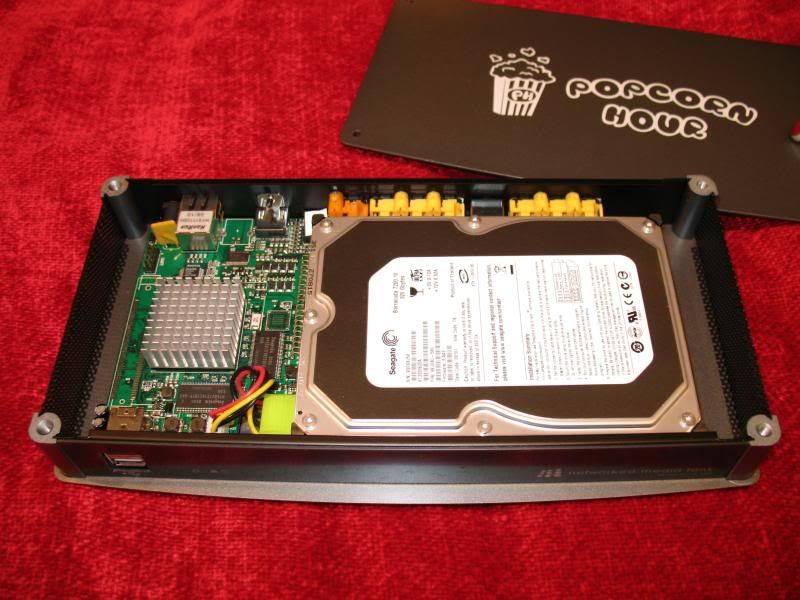
Now filled with a hard drive.

So, I tossed in an inexpensive 320GB PATA drive that was on sale at Fry’s and fired it up. Continue reading “Will The Popcorn Hour NMT Replace My XBMC?”


Local Broadcasters Can’t Catch A Break. Mostly Their Fault.

A writer’s strike, shitty programming and the Internet. Oh my!

Viewer’s are leaving appointment television by the droves and broadcasters are scrambling to do something, anything to keep them firmly planted on the couch during prime time. I’ve covered the topic of declining viewers in the past, but the trend in hemorrhaging viewership of major network programming and in turn local broadcast stations is accelerating, even as the number of overall television viewers are up and as many cable shows enjoyed their best ratings during the month of April. The “Big Four” networks lost 9% of their viewers over the 2008 April/May period from 2007 and last year they were already down 5% from 2006.

Image courtesy Los Angeles Independent Media Center

During the writer’s strike from November 5, 2007 to February 12, 2008 broadcast networks complained in advance that their ratings would suffer, but that it was a temporary setback in their business. Well, enough time has passed for the numbers to come out and set a table for them to eat their words. A good summary of the broadcast losers and cable winners over the past few months can be found here. Continue reading “Local Broadcasters Can’t Catch A Break. Mostly Their Fault.”

Competition for Cable & Satellite? Says Who? Sezmi.

Sezmi is a startup out of Belmont, California that hopes to win subscribers from cable and satellite providers by providing a cheaper, on-demand and real-time television viewing service for a select selection of the more popular broadcast and “cable” channels.

The evolution of Sezmi.

This new company is born from the ashes and founders of the defunct USDTV service that burned through its cash from investors such as Fox Television Stations, Hearst-Argyle and LIN TV, but ultimately ceased operations back in March 2007.  Previously under the stealth name “Building-B“, Sezmi recently unveiled their new commercial name and are again trying to entice the interest of broadcasters into donating part of their digital television data stream in order to help make their business model work. Continue reading “Competition for Cable & Satellite? Says Who? Sezmi.”

NAB 2008 In Review.

This year’s NAB had a bit more energy among television broadcasters than the NAB show last year and almost all of it was around the mobile DTV plans and testing currently going on. Despite the interest in mobile DTV and the NAB claiming ~105,000 registered attendees, the North and Central halls were only mildly busy. Attendance, as judged by “elbow room” has significantly waned year after year and it is easier to navigate the halls and major vendor booths. Broadcasting & Cable agrees with me on this.


Looking at an entrance to the Central Hall above the NAB store.

The South upper and lower halls of the Las Vegas Convention Center, by way of contrast, were significantly more energetic, crowded and younger! Since the South halls were occupied by film production/support companies and smaller “new media” (read: Internet related or centric) businesses this comes as little surprise to me. Two notable companies that abstained from attending NAB this year were Avid and Apple. Apple really didn’t have a need to attend this trade show, but Avid’s considerable customer base for their product, outside of film, is the broadcast community and their absence does not portent good business sense or, more importantly, sales for the future and their stock price seems to reflect that.

The Adobe Booth

During the show I did notice more DTV transmitters on the floor than last year. Continue reading “NAB 2008 In Review.”

DTV “coupon” converter box put to the test. Does it work?

No “film at 11” drama here; yes, it works and it works surprisingly well for a $60 piece of electronics ($20 after the $40 coupon is applied).

For those that don’t know, this Insignia brand NS-DXA1 DTV converter box is one of a few available devices which are part of the US government’s effort to make it possible for people to view over-the-air DTV broadcasts on older, analog-only televisions when the analog transmitters (about 1,700 of them nationwide) are required to cease operations on February 17th, 2009. The coupon program’s plan is to provide a way for those on fixed incomes, or the inability to replace their existing set with one that has a digital OTA tuner in it, to continue to view their favorite local broadcast stations. Continue reading “DTV “coupon” converter box put to the test. Does it work?”

How the format war has changed my purchasing habits.

To be succinct, I simply don’t (and won’t) buy as much as I did before. For the past few years I didn’t think too hard about buying the week’s more popular DVD release of the latest blockbuster (or near blockbuster). This is why my DVD collection sprang to over 400 titles! I didn’t always buy full retail on “new release Tuesday” if I found bargains of popular movies that had been on DVD for a few months already and retailers were anxious to thin their inventory, but the collection grew and represents quite a sizable chunk of change. Continue reading “How the format war has changed my purchasing habits.”

Is the NAB Show going the way of COMDEX?

For those that don’t know, COMDEX was a computer centric convention that ran in Las Vegas from 1979 to 2003 before lagging attendance from competing conventions and the convergence of consumer electronic devices ultimately made it uninteresting and killed it off.

Back in November of 2007 Avid, currently facing too much competition from Final Cut software and currently trading at its lowest point since early 2003, declared it would not have its usual ginormous booth at the convention, but would still have a presence there conducting meetings with customers in an attempt to regain their “focus”.  Their disappointing financials and not-so-optimistic view of their 2008 expectations undoubtedly had something to do with this decision. Continue reading “Is the NAB Show going the way of COMDEX?”

TV Broadcasters struggle to remain relevant. Probably too little, too late.

Traditional, over-the-air TV broadcasters are pretty screwed. Time and technology are rapidly shooting past and only now are they collectively looking for ways to recapture a lost audience. Only now are they, as a majority and as part of a coordinated effort, actively promoting the DTV transition, by way of shutting off the analog transmitters under the government’s plan, that is scheduled to occur February 17th, 2009.

Ashamedly, even though they have had digital transmitters operational for several years because of the government digital transition mandate, most broadcasters have flat out refused to promote that fact to their viewers outside of the addition of the new call letters on an hourly legal ID. Many broadcasters were hoping for and using the NAB to lobby for yet another delay in the analog shutoff.
In much the same way the Emperor felt superior in his new clothes, broadcasters felt secure in their lobbying arm, the NAB, and their sizable ad revenue which they wore like a protective cloak of invulnerability. If it were not for the SHVIA act, retransmission consent, must-carry and syndicated exclusivity laws that essentially force local market broadcasters onto a regional cable head-end’s television set, it is extremely likely that television broadcasters would now be a much leaner business – as radio has become. As it stands, even these legal protections are unable to completely stem the hemorrhaging of viewers to alternative entertainment outlets. Continue reading “TV Broadcasters struggle to remain relevant. Probably too little, too late.”

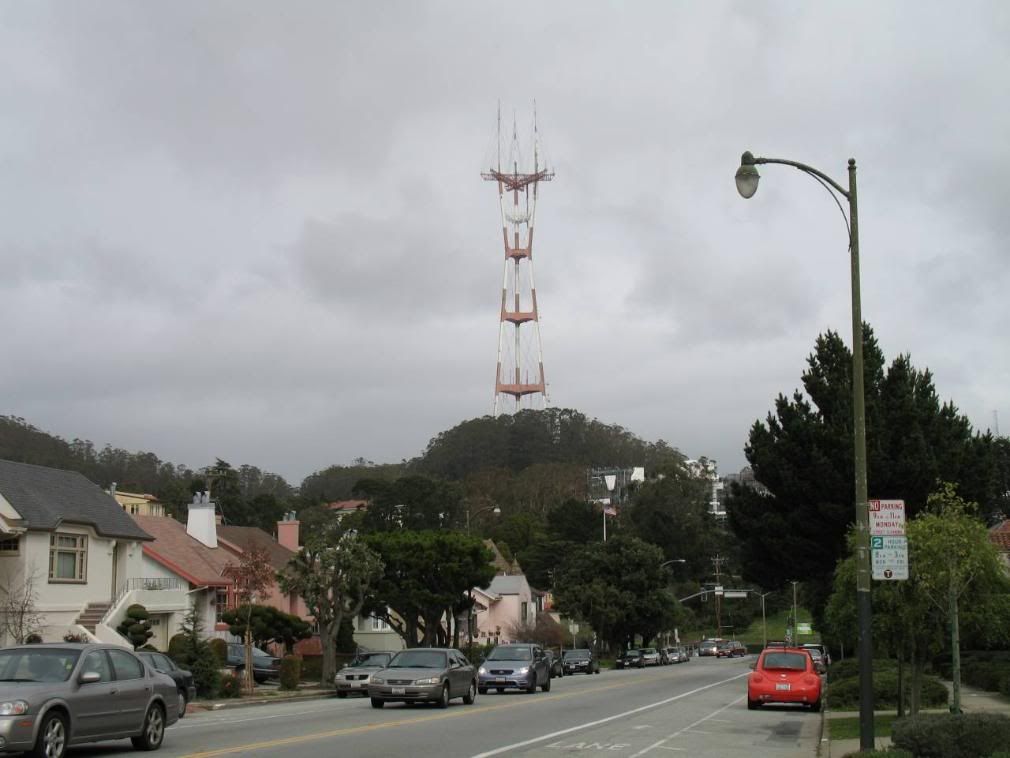
Visiting an SF Landmark. Sutro Tower.

Not many people get inside Sutro Tower, so I consider myself pretty fortunate. My current employer doesn’t have transmit facilities or other interests at Sutro, so I was escorted through the gate and into the facility by a contract engineer, John Buckham, that our SF station has who also maintains a radio station there for another employer of his.

Sutro Tower from a distance.

This was a unique opportunity for a few reasons; since I don’t work there, getting access is impossible unless you know someone and can get something arranged. This is a historically interesting site and it is a unique tower engineering design that has currently weathered 25 years of use. Continue reading “Visiting an SF Landmark. Sutro Tower.”