
The DTV Delay Debacle. Just cut the cord already…

Recently our congress has passed legislation to delay the DTV transition/analog shut-off yet again – this time to June 12th of 2009.  For those that aren’t already aware this makes the 2nd time the date has been put off.  The original date (created in 1997) for this to happen was December 31st, 2006, but in February of 2006 legislation was created to change the date to February 17th, 2009.

One interesting element with this administration is the online posting of the bill (as of this posting it hasn’t been signed into law) on the White House website and the ability to add public comment.  Just because I could, I added my own two cents which is likely to be promptly ignored:

I believe the delay, while appearing to be in the public’s best interest, actually will cost local TV stations more money to keep obsolete , power-hungry transmitter facilities running that will in turn, drain station budgets when they were un-prepared to absorb the expense.  This is exacerbated by the fact that it is a non-political ad year AND the amazingly bad economy.  The net result is that projects will go unfunded and station workers laid-off to mitigate the added operational expense.

They wisely limited me to 500 characters.  Meanwhile, I’ve found that my views are not just echoed by fellow broadcast engineers, but by an FCC commissioner as well. Continue reading “The DTV Delay Debacle. Just cut the cord already…”
Hello Mobile DTV. Goodbye HDTV.

Regardless of what some liberal arts students or free-love hippies may tell you, you don’t get something for nothing.  Or, better yet, as the redoubtable Robert Heinlein coined, “TANSTAAFL” (There ain’t no such thing as a free lunch).  This simple truth frames the cold, hard realities about to face broadcasters after the current mobile DTV trials wrap up.  It will weigh even heavier when the mobile standard is finalized and equipment is available for purchase in Q2 (tentatively) of 2009.

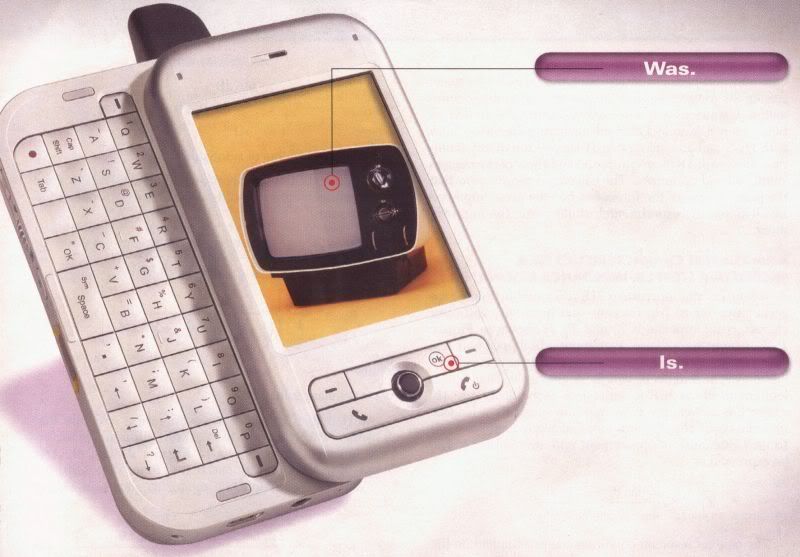
An ad by Anaren that appeared in Microwave Journal.

When cable companies take a broadcaster’s primary digital signal, either from an over-the-air broadcast or a direct fiber feed, they tend to re-sample it (unless they under an agreement expressly forbidding it), put it on one of their available 38.8Mb capacity QAM channels and share that QAM channel with another digital channel (or two or more!) shaving the channel’s data rate in the process.  Some cable companies are more aggressive than others in their re-compressing.

Continue reading “Hello Mobile DTV. Goodbye HDTV.”

Another DTV Converter box goes under my microscope. OK, my glasses…

Not too long ago I had some time to review the capabilities of an Insignia CECB (coupon eligible converter box) and found that it was quite capable for its intended purpose. However, it lacked a few features and I discovered a matrix that showed one converter box with the most features of any CECB and it was for sale at a local Best Buy.

The Apex DT250 sold for $60 like the other CECBs and is a similar size and form factor. If you have $40 coupon this box would only cost $20 plus tax. The difference it has from many of the other converter boxes is that it provides for analog pass-through and the ability to control a smart antenna. Since I do not have a smart antenna on hand (right now no one does) I focused on its ease of use and performance in picking up OTA digital signals.

What's in the box...

Continue reading “Another DTV Converter box goes under my microscope. OK, my glasses…”

Competition for Cable & Satellite? Says Who? Sezmi.

Sezmi is a startup out of Belmont, California that hopes to win subscribers from cable and satellite providers by providing a cheaper, on-demand and real-time television viewing service for a select selection of the more popular broadcast and “cable” channels.

The evolution of Sezmi.

This new company is born from the ashes and founders of the defunct USDTV service that burned through its cash from investors such as Fox Television Stations, Hearst-Argyle and LIN TV, but ultimately ceased operations back in March 2007.  Previously under the stealth name “Building-B“, Sezmi recently unveiled their new commercial name and are again trying to entice the interest of broadcasters into donating part of their digital television data stream in order to help make their business model work. Continue reading “Competition for Cable & Satellite? Says Who? Sezmi.”

NAB 2008 In Review.

This year’s NAB had a bit more energy among television broadcasters than the NAB show last year and almost all of it was around the mobile DTV plans and testing currently going on. Despite the interest in mobile DTV and the NAB claiming ~105,000 registered attendees, the North and Central halls were only mildly busy. Attendance, as judged by “elbow room” has significantly waned year after year and it is easier to navigate the halls and major vendor booths. Broadcasting & Cable agrees with me on this.


Looking at an entrance to the Central Hall above the NAB store.

The South upper and lower halls of the Las Vegas Convention Center, by way of contrast, were significantly more energetic, crowded and younger! Since the South halls were occupied by film production/support companies and smaller “new media” (read: Internet related or centric) businesses this comes as little surprise to me. Two notable companies that abstained from attending NAB this year were Avid and Apple. Apple really didn’t have a need to attend this trade show, but Avid’s considerable customer base for their product, outside of film, is the broadcast community and their absence does not portent good business sense or, more importantly, sales for the future and their stock price seems to reflect that.

The Adobe Booth

During the show I did notice more DTV transmitters on the floor than last year. Continue reading “NAB 2008 In Review.”

DTV “coupon” converter box put to the test. Does it work?

No “film at 11” drama here; yes, it works and it works surprisingly well for a $60 piece of electronics ($20 after the $40 coupon is applied).

For those that don’t know, this Insignia brand NS-DXA1 DTV converter box is one of a few available devices which are part of the US government’s effort to make it possible for people to view over-the-air DTV broadcasts on older, analog-only televisions when the analog transmitters (about 1,700 of them nationwide) are required to cease operations on February 17th, 2009. The coupon program’s plan is to provide a way for those on fixed incomes, or the inability to replace their existing set with one that has a digital OTA tuner in it, to continue to view their favorite local broadcast stations. Continue reading “DTV “coupon” converter box put to the test. Does it work?”

TV Broadcasters struggle to remain relevant. Probably too little, too late.

Traditional, over-the-air TV broadcasters are pretty screwed. Time and technology are rapidly shooting past and only now are they collectively looking for ways to recapture a lost audience. Only now are they, as a majority and as part of a coordinated effort, actively promoting the DTV transition, by way of shutting off the analog transmitters under the government’s plan, that is scheduled to occur February 17th, 2009.

Ashamedly, even though they have had digital transmitters operational for several years because of the government digital transition mandate, most broadcasters have flat out refused to promote that fact to their viewers outside of the addition of the new call letters on an hourly legal ID. Many broadcasters were hoping for and using the NAB to lobby for yet another delay in the analog shutoff.
In much the same way the Emperor felt superior in his new clothes, broadcasters felt secure in their lobbying arm, the NAB, and their sizable ad revenue which they wore like a protective cloak of invulnerability. If it were not for the SHVIA act, retransmission consent, must-carry and syndicated exclusivity laws that essentially force local market broadcasters onto a regional cable head-end’s television set, it is extremely likely that television broadcasters would now be a much leaner business – as radio has become. As it stands, even these legal protections are unable to completely stem the hemorrhaging of viewers to alternative entertainment outlets. Continue reading “TV Broadcasters struggle to remain relevant. Probably too little, too late.”

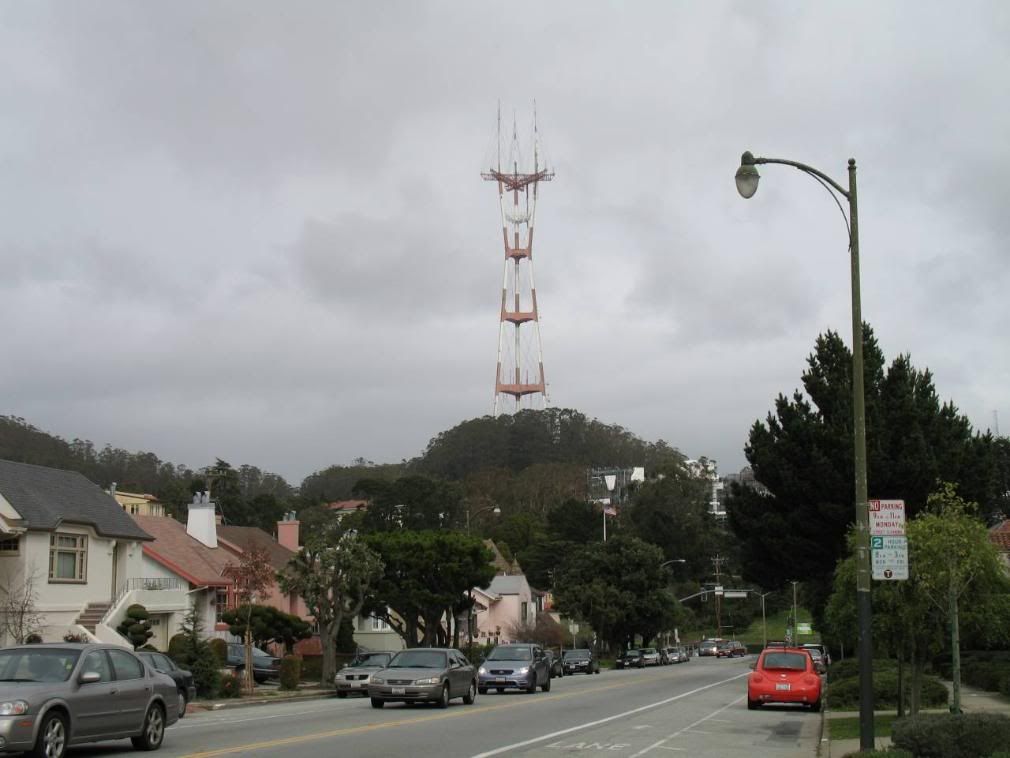
Visiting an SF Landmark. Sutro Tower.

Not many people get inside Sutro Tower, so I consider myself pretty fortunate. My current employer doesn’t have transmit facilities or other interests at Sutro, so I was escorted through the gate and into the facility by a contract engineer, John Buckham, that our SF station has who also maintains a radio station there for another employer of his.

Sutro Tower from a distance.

This was a unique opportunity for a few reasons; since I don’t work there, getting access is impossible unless you know someone and can get something arranged. This is a historically interesting site and it is a unique tower engineering design that has currently weathered 25 years of use. Continue reading “Visiting an SF Landmark. Sutro Tower.”

Treating analog TV transmitters like sickly inmates on death row. Keep ‘em alive… For now…

All across the nation there are TV stations headed toward the analog shutdown mandated by congress on February 17th, 2009. At which point, only the station’s high power digital transmitter will be authorized to stay on the air along with the Class ‘A’ and low-power TV stations and their low-power translators (for the moment).

So, until that happy day arrives and the engineers can toss a hand grenade in the analog transmitter cabinet and run out the building laughing we need to keep these antiques running. This is one such story… Continue reading “Treating analog TV transmitters like sickly inmates on death row. Keep ‘em alive… For now…”

Ah, the smell of something free…

It’s a new year and as of the first of the year every Sally-Shopper and Johnny-Bag-O-Donuts is eligible for their two free coupons good for $40 towards the purchase of a set-top DTV converter box. Too bad it’s $30 short of the retail price of the box when it becomes available in mid February…

Although this program really had elderly and rural Americans in mind, I’ve read comments in blog postings by tech-savvy individuals that now of the program and are jumping on it early before the coupons dry up reasoning that since they have a couple other TVs in the house that aren’t on cable they ‘deserve’ them. Well, to be fair the details of the program are for TVs like that, but the spirit of the program it for the clueless and/or financially disadvantaged. In my opinion, if someone has the financial worthiness and time to log in to a tech blog and comment about how they deserve one or two of these coupons, they are the selfish, uppity assholes this coupon program was not intended for and is the parasitic type of person that undoubtedly needs so many TVs in their mother’s basement because no one wants to be around them and the television is their only friend. Continue reading “Ah, the smell of something free…”